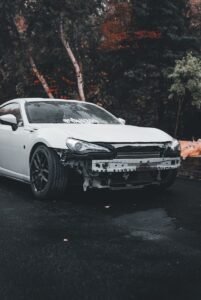
Collision coverage is one of the most expensive line items on a typical auto policy, and one of the most misunderstood. It pays for damage to your own vehicle when you collide with another car or object, regardless of fault. The question for most drivers is not whether collision is useful, but whether it still makes financial sense at any given point in the life of the car.
The math behind collision is shaped by three numbers: the deductible, the annual premium, and the actual cash value of the vehicle. As a car ages, its market value drops, but the deductible and premium often do not fall as quickly. Eventually the cost of carrying collision approaches a meaningful fraction of the payout cap, which is the value of the car itself.
A widely used rule of thumb is to consider dropping collision when the annual premium exceeds about ten percent of the car’s actual cash value. The math is rougher in practice. Drivers with a clean record on a depreciating sedan may be paying more than that threshold and still benefit from coverage if they cannot easily replace the vehicle out of pocket. Drivers in high-frequency claim regions may justify keeping collision longer.
What has changed in 2025 is the cost of the average collision claim. Repairs that used to be straightforward sheet metal work now involve calibration of forward-collision sensors, lane-keeping cameras, and adaptive headlights. A simple bumper replacement on a modern crossover can include a thousand dollars of recalibration and module reprogramming on top of the part itself.
Insurers track these severity trends closely, and they are reflected in collision premiums. Vehicles with sophisticated driver-assistance systems often cost more to insure for collision than equivalent older models, even though the same systems can prevent some accidents in the first place. The savings on accident avoidance can be quietly offset by the price of repair when an incident does occur.
Deductible selection is the lever many drivers overlook. Raising a deductible from $500 to $1,000 typically lowers the collision premium meaningfully, sometimes by 15 to 25 percent. The trade-off only makes sense if the driver maintains an emergency fund that comfortably covers the higher deductible without disrupting other expenses.
Leased vehicles bring a different dynamic. Lease contracts almost always require both collision and comprehensive coverage at low deductibles. Dropping coverage is not an option until the lease ends, and gap protection becomes essential because lease payoff amounts can exceed actual cash value during the early years of the lease.
Drivers with classic, restored, or specialty vehicles should look beyond standard collision and consider agreed-value coverage. With agreed value, the insurer and owner negotiate a payout in advance, eliminating arguments about depreciation. Standard collision policies will pay actual cash value, which can produce frustrating outcomes for collectible cars whose market value moves independently of national pricing guides.
Used-car prices, which spiked dramatically during the pandemic and have remained elevated, are another factor that affects when drivers should drop collision. A car that would have been worth $4,000 in 2018 may still be valued at $7,500 today, which can shift the cost-benefit analysis back toward keeping coverage longer than expected.
The bottom line is that collision is not a one-time decision made when the policy is issued. It is a coverage that should be reevaluated every year as the vehicle ages, market values shift, and household savings change. Drivers who treat collision as an autopilot line item often pay too much for too long, while those who drop it too early can end up paying for an expensive accident entirely out of pocket.
Drivers considering whether to drop collision should also look at uninsured motorist property damage coverage. In some states, this coverage pays for damage to your vehicle when an uninsured driver hits you. Where it is available, it can fill part of the gap left by dropping collision, although it does not respond to single-vehicle accidents or comprehensive perils.
Storage decisions affect the math too. A vehicle that lives in a garage, gets driven occasionally, and is well maintained holds value longer than equivalent vehicles in tougher conditions. Owners who treat their cars with care can justify keeping collision longer because the realistic claim payout reflects a higher actual cash value.
The emotional side of collision deserves a mention. Cars hold memories, milestones, and identity for many owners. The financial decision to drop coverage on a paid-off car is rational, but it interacts with how attached the owner feels to the specific vehicle. Recognizing the emotional component allows for honest decisions that fit the household rather than the spreadsheet alone.
The auto insurance landscape rewards drivers who treat their policy as a living financial instrument rather than a static bill. Reviewing coverage at every renewal, asking pointed questions, and shopping the market regularly produce measurable savings and stronger protection. The hour or two spent each year on this work delivers a return that few other household financial habits can match, particularly when premiums are climbing and claim economics are shifting underneath. Drivers who engage with the process consistently end up paying less, recovering more after losses, and avoiding the painful surprises that catch passive policyholders off guard.